I have two Master's...
One in Digital Transformation Leadership and another one in Cyberpsychology. I also have my own company dedicated to helping organizations adopt AI by putting their people at the center of it all. I worked for startups packed with extremely successful and talented people from Silicon Valley. And also worked for the United States Government.
And yet, this Tuesday, I stared at a blinking cursor on ChatGPT and felt… completely incompetent.
I was trying to build a specific GPT to automate some of my work – something I have done so many times. The model kept hallucinating and, for some reason, I couldn’t find the right prompt. It felt like everything about the tool was different all of a sudden.
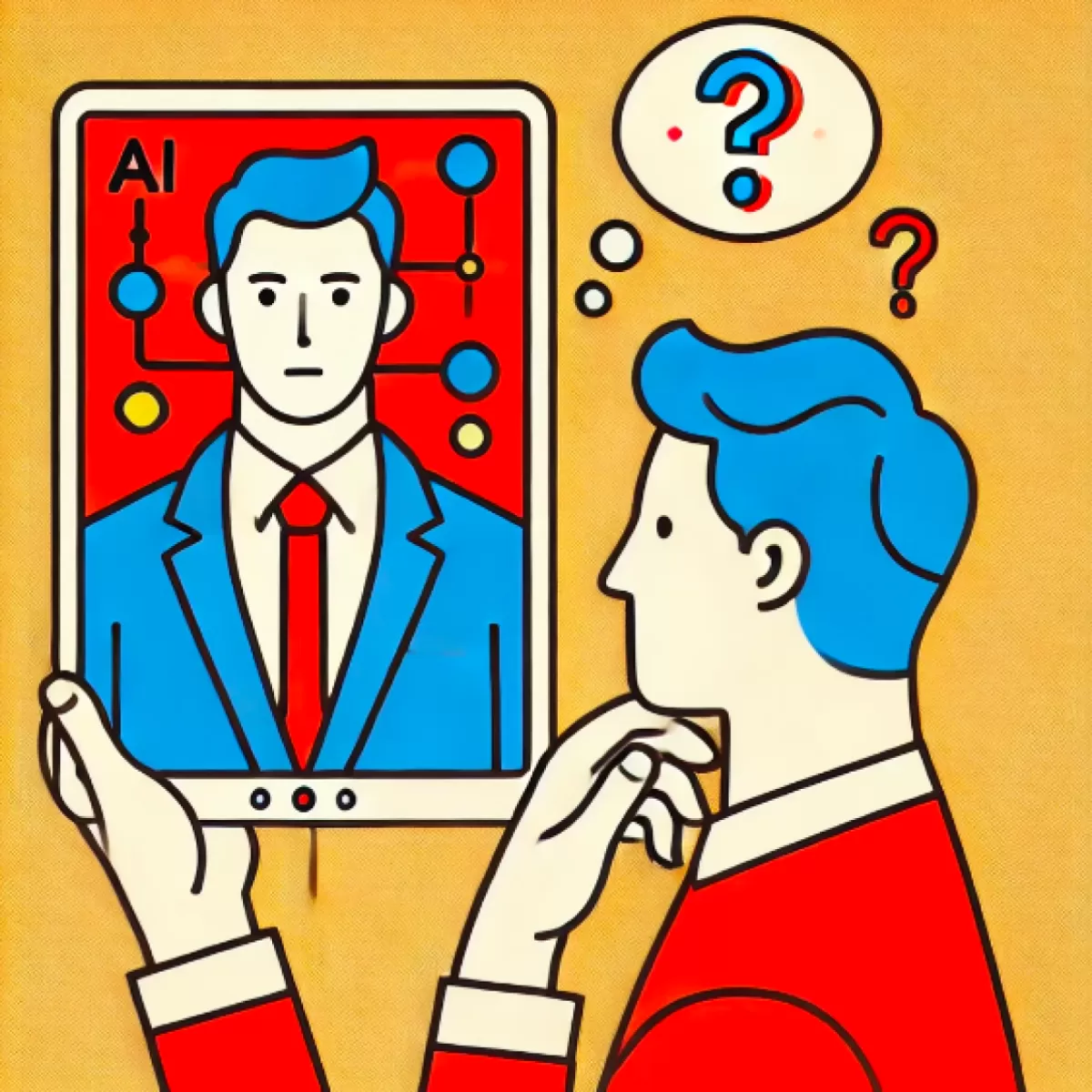
For a split second, the thought crept in: “If I, the (so-called) ‘expert,’ can’t keep up with this, am I just a fraud or pretending?”
AI Imposter Syndrome
If you’ve felt this recently, you are definitely not alone. A recent survey I have read found that 71% of CEOs (or leaders in general) admit to feeling imposter syndrome. Many feel pressured to have all the answers on GenAI right now.
In my work as a Cyberpsychologist, I see why this is happening. We are shifting how we define competence:
Old World: Competence = Knowing the answer.
AI World: Competence = Curating the answer.
When the machine “knows” more facts than us, it’s easy to feel like we are losing our value. That feeling of “stupidity”- the gap between what you know and what you need to know – isn’t a bad thing. It’s a signal.
The Science of "Not Knowing"
Here is the important data-backed insight: that feeling is a competitive advantage.
Research highlights the trait of Intellectual Humility: the willingness to recognize that one’s knowledge is limited. People with high intellectual humility are better at adopting new information and are less defensive when challenged.
Adding to that, these feelings often appear in high performers because they prioritize accuracy and social connection over ego.
Why "Feeling Like an Imposter" Is a Superpower
When you stop trying to be the smartest person in the room (or “smarter” than the AI), you tap into three specific behaviors that “know-it-alls” miss:
- You Experiment Faster. If you aren’t afraid of failing and looking like you “don’t know,” you are more likely to try new tools, break them, and learn from the failure.
- You Build Safety. When a leader says, “I don’t know how to use this yet,” it signals to the rest of the team that it is safe for them to learn, too. This reduces the “Performative Productivity” where staff pretend to use AI just to look busy.
- You Spot the Hallucinations. If you are humble enough to doubt, you are diligent enough to verify. The “confident” users are the ones who blindly trust the AI’s output. The “humble” users double-check it.
The Takeaway
We need to stop hiding our AI anxiety behind a mask of certainty. Your team doesn’t need you to be a “prompt engineering master” or something like that, who never makes a mistake.
They need you to be the “Human-in-the-Loop.” They need you to have the courage to say: “I’m not sure how to handle this yet. Let’s figure it out together.”
So, yes, in all honesty, AI sometimes makes me feel like I’m not as smart as I thought I was. I’ve decided to treat that feeling not as a failure, but as a sign that I’m pushing my boundaries. And then, just let the magic begin!